Untitled Document


Summary of the Economic and Fiscal Terms

Overview

Namibia offers a streamlined and attractive fiscal package, with some important new incentives, for petroleum exploration, development and production operations. 

There are three principal components in the fiscal package:

  • Royalty
  • Petroleum Income Tax (PIT)
  • and an Additional Profits Tax (APT).

Supplemented by the provisions of the Model Petroleum Agreement, 1998, these three fiscal elements are framed in modern legislation, which has been specially formulated for the international oil industry.

 The relevant legislation is:

The economic and fiscal terms have been designed so that almost the entirety of the Government's "Take" will arise from the three principal fiscal elements. In this regard, prospective investors will wish to note that: 
  1. there are no signature, discovery or production bonuses;
  2. most items needed for Petroleum Operations can be imported duty free (fuel being an example of an exception); 
  3. oil companies are exempt from the Non-Resident Shareholders' Tax; and
  4. Although desired, there is generally no mandatory requirement for State (NAMCOR) participation.

The Principal Fiscal Elements

  1. Royalty

Payable quarterly, Royalty is levied at the rate of 5% of the market value of oil and gas produced and saved. (Under earlier Rounds the rate was 12.5%). In special circumstances, the Minister may defer, remit or refund Royalty due, upon application made by the holder of a production licence.

2.  Petroleum Income Tax (PIT)

PIT is levied at the rate of 35% of taxable income. (Until 1998, the rate was 42%).

In the computation of taxable income, exploration expenditure and operating expenditure is written off immediately and in full (i.e. 100% depreciation). Development expenditure is depreciated over 3 years (33.33% per annum, straight line), and deducted accordingly.

PIT is assessed on a Licence Area (i.e. contract area) basis. However, as a new incentive, exploration expenditure incurred by a licensee, after the enactment of the Petroleum Laws Amendment Act, 1998, in any Licence Area in Namibia may be deducted in the computation of that licensee's PIT taxable income from a producing Licence Area.  

3.  Additional Profits Tax (APT)

An incremental three tiered APT is charged on the after-tax net cash flow from petroleum operations in each Licence Area separately. Exploration, development and operating expenditures, as well as Royalty and PIT, are all fully deductible in the year they are paid in the computation of the APT net cash flow for the year.

APT will only be paid if the petroleum operations in a Licence Area earn an after-tax real (i.e. inflation- adjusted) rate of return of 15%. The second and third tiers of APT become payable once the profitability level exceeds 20% and 25% respectively.

The first tier rate of APT is established in the legislation (through a formula) at 25%. However, the incremental second and third tier APT rates are biddable by, and negotiable with, each prospective investor consortium, and the agreed rates will be set out in the respective Petroleum Agreement.

Other Financial Matters

As is standard international practice, license application fees, annual license area rental charges and annual training sums are payable in addition to the main fiscal impositions. The application fees are modest, and range from N$3,000 to N$30,000 (i.e. from about US$350 to US$3500, at the exchange rate of N$8.49 = US$1 ruling on 31 January 2003 ).

Annual License area rental charges (which are deductible in the computation of PIT and APT, and are not indexed to inflation) are as follows:

  • N$60 (approx. US$7) per sq. km. of exploration area held during the first 4 years (and any discretionary extension period);
  • N$90 (approx. US$10.6) per sq. km. of exploration area held during the next 2 years (and any discretionary extension period);
  • N$120 (approx. US$14) per sq. km. of exploration area held during the subsequent 2 years (and any discretionary extension period);
  • N$150 (approx. US$17.7) per sq. km. of exploration area held during any third renewal period;
  • N$1,500 (approx. US$177) per sq. km. of production area held.

Petrofund

Licensees must commit to spend a (biddable and negotiable) minimum annual amount specifically on the training of Namibians in petroleum and petroleum-related matters.    

Decommissioning Trust Fund

As a result of the Petroleum Laws Amendment Act, 1998, licensees will be required (as from the date when half of the estimated petroleum reserves have been produced) to make annual contributions into decommissioning trust funds. These annual contributions will be deductible in the computation of taxable income for both PIT and APT.

Although not insisting on a Bank Guarantee under the Third Round, Government reserves the right to ask certain licensees to arrange a Bank Guarantee where this is deemed to be in the national interest.

Lastly, prospective investors will wish to note that each Petroleum Agreement will contain a comprehensive, modern Accounting Procedure, as well as detailed Valuation provisions based on competitive international fair market pricing principles.


We have new ventures coming on - Read about these
   
Get a glimpse of our work

Contact Us

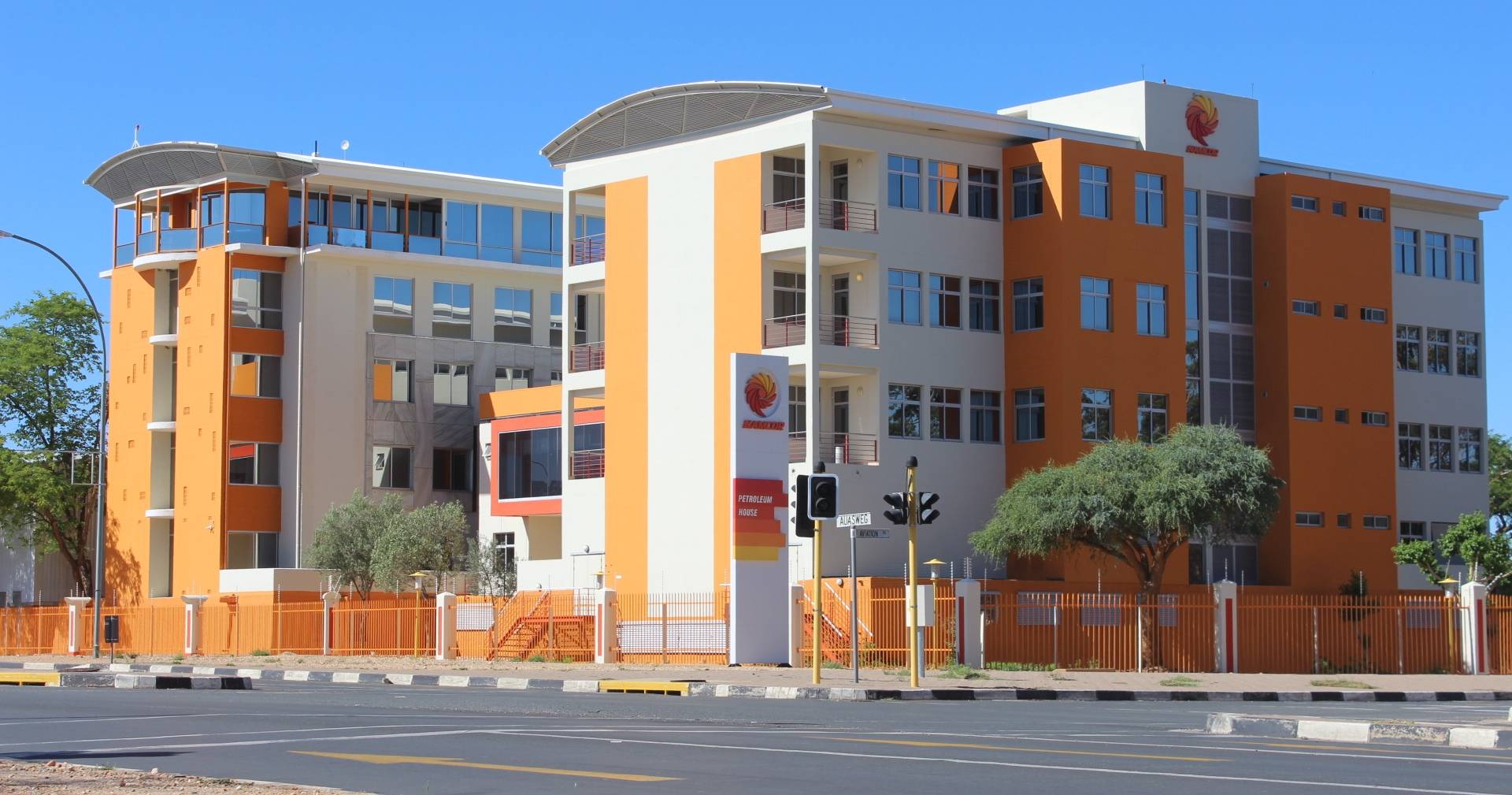
1 Avaition Road, Petroleum House
Private Bag 13196, Windhoek
Tel: +264 61 204 5000
Fax:+264 61 5061/30/92
Send us your feedback
© 2006 National Petroleum Corporation of Namibia. All rights reserved